AI vs Carbon Efficiency: The Hyperscaler Gap
Written by Jack Linnett (Co-founder & CEO)
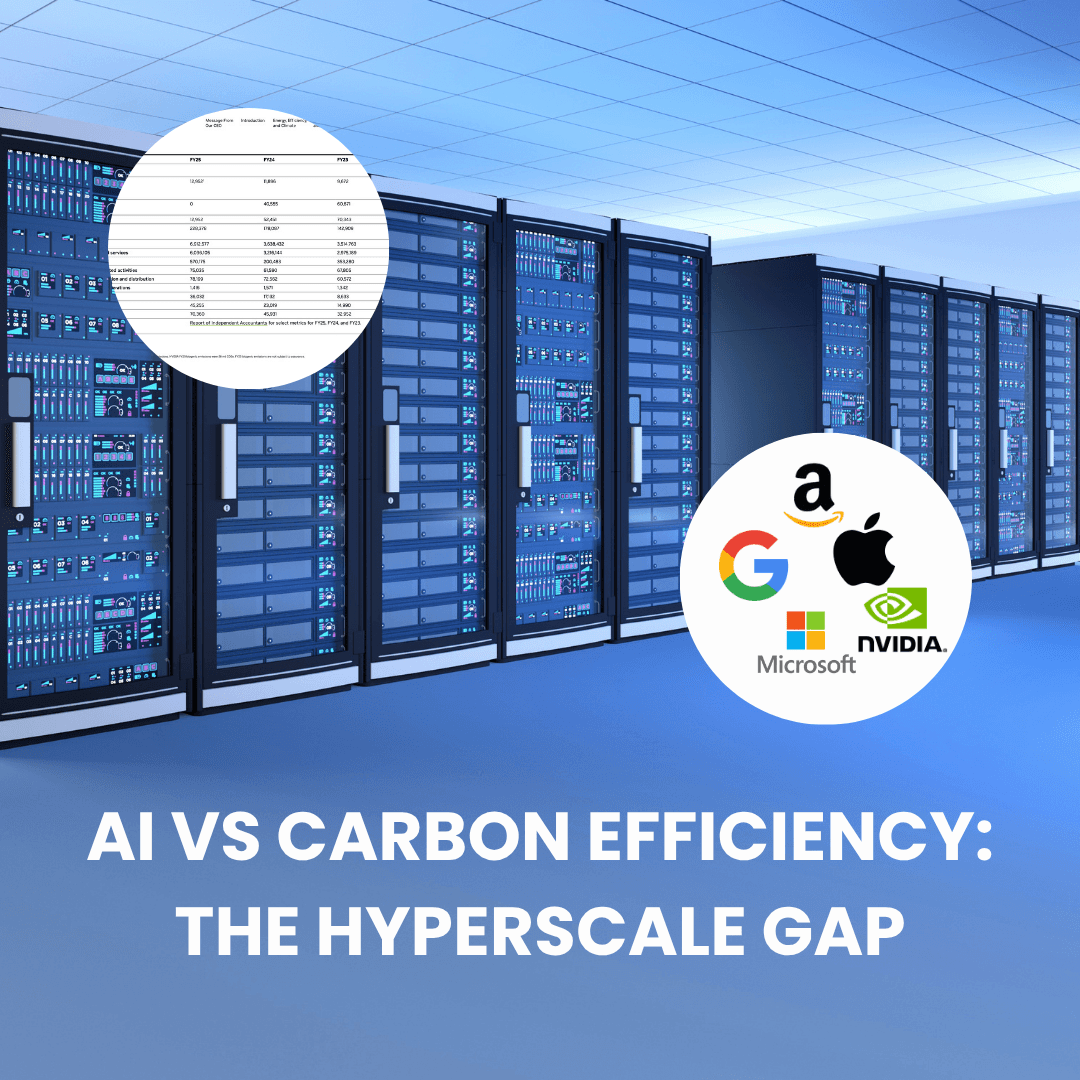
AI is scaling fast. Carbon efficiency isn’t keeping up.
We’ve analysed 2,617 IT companies in the Earthmark database, and one metric is starting to matter in both earnings and ESG conversations: carbon intensity (tCO2e/$1M revenue).
𝗪𝗵𝗮𝘁’𝘀 𝗵𝗮𝗽𝗽𝗲𝗻𝗶𝗻𝗴
• IT sector emissions: +147% YoY (2.85M → 7.05M tCO2e).
• Primary driver: hyperscale AI training + data centre buildout.
• Signal: revenue growth is outpacing carbon efficiency gains.
We've processed the latest reports and disclosure to focus on how this looks with some of the Big Tech players.
𝗧𝗵𝗲 𝗵𝘆𝗽𝗲𝗿𝘀𝗰𝗮𝗹𝗲 𝗽𝗿𝗲𝗺𝗶𝘂𝗺
• 𝗔𝗺𝗮𝘇𝗼𝗻: 112.8tCO2e/$1 M revenue. Leads total volume with 80.8M tCO2e in emissions, reflecting the dual impact of expanding AWS AI infrastructure and global logistics fulfilment (8.7 × sector benchmark).
• 𝗠𝗶𝗰𝗿𝗼𝘀𝗼𝗳𝘁: 72.0tCO2e/$1M — ~5.6× above sector weighted avg (12.9).
• 𝗚𝗼𝗼𝗴𝗹𝗲: 46.8 tCO2e/$1M — energy +34.5% YoY (44M MWh); emissions at 18.8M tCO2e.
• Takeaway: AI infrastructure = structurally higher carbon intensity (for now).
𝗥𝗲𝘃𝗲𝗻𝘂𝗲 𝘃𝘀 𝗲𝗳𝗳𝗶𝗰𝗶𝗲𝗻𝗰𝘆
• 𝗡𝗩𝗜𝗗𝗜𝗔: 32.1 tCO2e/$1M. ~99.8% Scope 3; revenue growth masks footprint.
• 𝗔𝗽𝗽𝗹𝗲: 36.8 tCO2e/$1M. Strong revenue efficiency + 96.5% recycling rate.
• Takeaway: intensity can look “healthy” while absolute emissions surge.
𝗧𝗵𝗲 𝗿𝗲𝗮𝗹 𝗰𝗼𝗻𝘀𝘁𝗿𝗮𝗶𝗻𝘁: 𝗦𝗰𝗼𝗽𝗲 𝟯
• 85–99.8% of emissions sit in supply chains (chips, GPUs, steel, concrete).
• This is where most AI-related carbon sits—and where visibility is weakest.
𝗪𝗵𝗮𝘁 𝘁𝗵𝗶𝘀 𝗺𝗲𝗮𝗻𝘀 (𝗰𝗼𝗺𝗺𝗲𝗿𝗰𝗶𝗮𝗹𝗹𝘆)
• Vendor selection: carbon intensity is becoming a procurement KPI, not just disclosure.
• Risk: “100% renewable” claims don’t reflect real-time AI workloads or embodied carbon.
• Opportunity: 24/7 carbon-aware compute + circular hardware = differentiation.